Working with industry
The School of Psychological Science has a strong history of industrial collaborations, through links with local, national and international partners. We welcome enquiries from potential future industrial sponsors.
Research and consultancy
Specific research capacities
The CO2 challenge
Professor Marcus Munafo and Dr Angela Attwood run one of a few UK-based laboratories that specialise in the application of the carbon dioxide (CO2) challenge to human participants. The CO2 challenge induces stress that models general anxiety at lower doses (e.g., 7.5%) and panic-like symptoms at higher doses (e.g., 35%). Therefore, using this model, they are able to examine the relationship between stress and numerous variables of interest (e.g. drug taking behaviour, cognitive performance, motor function, emotional biases). They are also extremely experienced in the application of pharmacological challenges (particularly alcohol) that can be used to examine the effects of drugs on mood, performance and physiological responses.
Cognitive development in young children
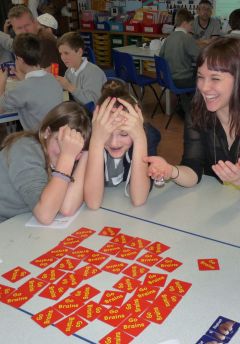
The Bristol Cognitive Development Centre focuses on cognitive development in young children. It has excellent links with the city's schools and wider community and a strategic partnership with the @Bristol Science museum. The centre's research is mainly behavioural and staff are particularly interested in evaluating interventions that may have implications for education and growth in the intellectual potential of the child.
Food and Behaviour
There is a great deal of expertise within the School in the area of food and behaviour. Professor Peter Rogers and Dr Jeff Brunstrom have worked extensively with the food industry on basic and applied research on appetite, satiety, portion size decisions, food choice and the acquisition of food preferences. For example, they have experience in applying 'traditional' preload, test meal designs, and have also developed novel and improved methods for measuring the satiety and 'expected satiety' effects of foods and food ingredients. A further specialism is assessment of the mood and cognitive performance effects of dietary constituents, including caffeine. The research involves field and internet studies, randomised controlled trials, as well as laboratory-based experimental studies carried out in the School's newly refurbished Nutrition and Behaviour Unit laboratories. There is also fruitful collaboration with experts in other Schools, and with other research facilities at the University of Bristol.
Camouflage
Dr Roland Baddeley and Dr Nick Scott-Samuel, in collaboration with Professor Innes Cuthill (School of Biological Sciences) and Dr Adam Shohet (QinetiQ), have expertise in camouflage of both static and moving targets.
Knowledge Transfer Partnerships
A Knowledge Transfer Partnership (KTP) is a partnership between a company, a graduate and a university who work together on a project that is strategically important to the company's future. Businesses of all sizes, industries and commercial sectors can take part in a KTP and use the expertise of academics and universities and the knowledge and skills of a graduate. Each KTP is partly funded the government receiving grants of up to 67% of the project's total cost, subject to the status and size of the company which makes a contribution to the balance of the programme costs.
For more information please contact the Director of Engagement, Imapct and Industrial Liaison
Consultancy
Members of the various research groups within the school are able to undertake consultancy work in many areas. For more information contact the members of staff within each research group, or the Director of Research.